The technological landscape is currently witnessing a paradigm shift that is quietly reshaping how we approach automation, problem-solving, and digital interaction. This transformation is driven by the ascent of multi-agent systems (MAS), a sophisticated field of computer science where multiple intelligent agents work in tandem to solve complex problems that would be impossible for a single agent to handle alone. As we move further into the era of advanced artificial intelligence, the concept of these collaborative digital entities is moving from academic labs to the core infrastructure of global industries.
Understanding the Fundamentals of Multi-Agent Systems
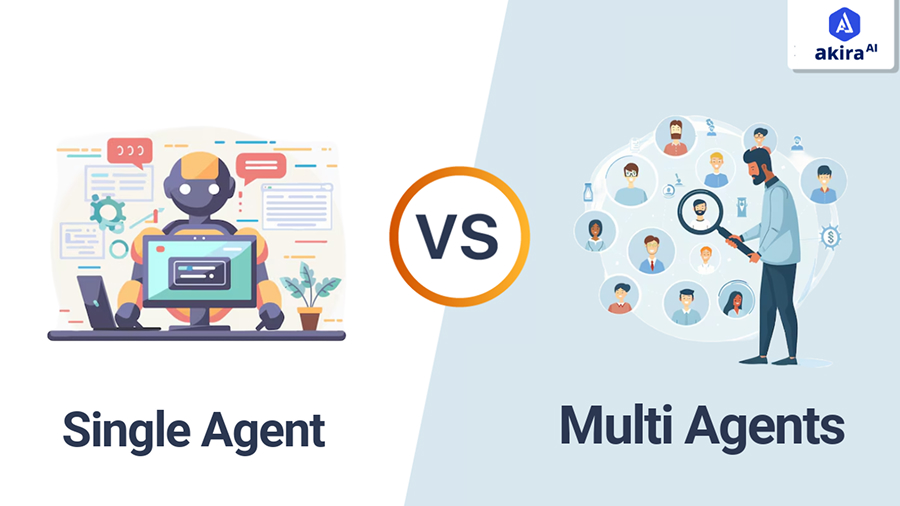
To fully appreciate the “takeover” that is underway, it is essential first to understand what a multi-agent system entails. At its heart, a multi-agent system is a computerized system composed of multiple interacting intelligent agents within an environment. These agents are autonomous entities they can make decisions independently based on a set of pre-defined goals and a perception of their environment. Unlike a single monolithic AI that attempts to control everything, a multi-agent system distributes intelligence and control across a network of specialized units.
The Core Characteristics of an Intelligent Agent
An agent within a MAS is not merely a simple script or a subroutine. It possesses specific characteristics that enable complex collective behavior:
-
Autonomy: Agents operate without the direct intervention of humans or others. They have control over their own actions and internal state.
-
Local Views: No single agent has a complete global view of the entire system. The environment is often vast and complex, so each agent is limited to its own “sphere of perception.” This decentralization is a key feature, preventing bottlenecks.
-
Decentralization: There is no designated “master” agent that controls all the others. Control and responsibility are shared, making the system more robust; if one agent fails, the system can often continue to function.
-
Social Ability: Agents interact with other agents through some kind of communication language. This interaction is not just about passing data; it involves cooperation, coordination, and negotiation to achieve common or individual goals.
Why the “Takeover” is Happening Now
The concept of multi-agent systems is not new; it has roots in distributed artificial intelligence research dating back decades. However, several key advancements have converged to create the perfect environment for their widespread adoption.
The Explosion of Connected Devices (IoT)
The Internet of Things (IoT) has created a world saturated with sensors and smart devices. A smart home, a connected factory floor, or an autonomous vehicle fleet is inherently a multi-agent environment. Each sensor, each actuator, and each control unit can be viewed as an agent. Managing these systems centrally becomes a logistical and computational nightmare. Multi-agent systems offer a natural framework for organizing this chaos, allowing devices to negotiate, share data, and make local decisions without phoning home to a central cloud for every single action.
Breakthroughs in Machine Learning, Specifically Reinforcement Learning
Modern multi-agent systems are supercharged by advancements in machine learning. In particular, multi-agent reinforcement learning (MARL) has emerged as a powerful tool. In MARL, agents learn optimal strategies not just by interacting with a static environment, but by interacting with other learning agents. This creates a dynamic where complex, emergent behaviors can develop. This is a significant step up from rule-based agents, allowing systems to adapt to new situations and optimize for outcomes in ways that human programmers might never have explicitly coded.
Increased Computational Power
Training and running multiple sophisticated AI agents simultaneously requires immense computational resources. The advent of powerful GPUs and cloud computing clusters has made this feasible. What was once only possible in well-funded research institutions is now accessible to startups and mid-sized companies through cloud service providers.
Key Application Domains of Multi-Agent Systems
The theoretical advantages of MAS scalability, robustness, flexibility, and parallelism translate into tangible benefits across a wide range of industries. The “takeover” is most visible in these key areas:
A. Autonomous Vehicle Fleets and Traffic Management
The dream of self-driving cars is inherently a multi-agent problem. An individual self-driving car is an agent, but its success depends entirely on its interaction with other cars, pedestrians (agents with different goals), and traffic infrastructure. In this context, multi-agent systems are used to:
-
Coordinate Merging: Allowing vehicles on a highway ramp to negotiate a safe and efficient merge with vehicles already on the highway, smoothing traffic flow and preventing accidents.
-
Manage Intersections: Replacing traditional traffic lights with AI-managed intersections where vehicles communicate with each other and the intersection controller to pass through without stopping, dramatically improving fuel efficiency and reducing congestion.
-
Platooning: Enabling groups of trucks to drive closely together at highway speeds, reducing air drag and saving fuel. The lead truck acts as the primary driver, while the following trucks react in milliseconds.
B. Smart Grids and Energy Management
Our electrical grids are becoming more complex with the integration of renewable energy sources like solar and wind, which are intermittent by nature. Multi-agent systems are ideal for managing this complexity. Agents can represent:
-
Individual Homes: Managing energy consumption based on price signals and local generation from rooftop solar panels.
-
Battery Storage Units: Deciding when to store excess energy and when to release it back to the grid.
-
Power Generators: Ramping production up or down based on demand and grid stability.
These agents negotiate and trade energy in a micro-grid, ensuring a stable and efficient supply. If a cloud passes over a solar farm, the system can quickly compensate by drawing power from a battery agent or reducing non-critical consumption in nearby buildings.
C. Robotics and Warehouse Automation

Companies like Amazon have revolutionized warehousing with armies of robots. These robots are a classic example of a multi-agent system. They must navigate a shared space, avoid collisions, and coordinate to retrieve and deliver items. In this environment, agents must:
-
Deconflict Paths: When two robots need to cross the same aisle at the same time, they must negotiate a right-of-way or one must recalculate its path.
-
Allocate Tasks: When an order comes in, the system must decide which robot is best positioned to handle the task, considering battery life, current location, and current task load.
-
Swarm for Efficiency: In some applications, multiple smaller robots can work together to lift and move a large object that would be impossible for a single unit.
D. Financial Trading and Market Simulation
Financial markets are perhaps the most complex real-world multi-agent systems. Every trader, from a human with a laptop to a high-frequency trading algorithm, acts as an agent. Understanding and participating in these markets requires sophisticated MAS techniques. Applications include:
-
Algorithmic Trading: Agents are programmed to execute trades based on market conditions, news sentiment, and technical indicators, often operating on microsecond timescales.
-
Risk Assessment and Fraud Detection: A network of agents can monitor transactions across a vast financial network. One agent might specialize in detecting unusual patterns in credit card usage, while another monitors wire transfers. By sharing information, they can identify complex fraud schemes that a single system might miss.
-
Simulating Economic Policy: Central banks and economists use multi-agent simulations to model the potential impact of interest rate changes or new regulations on the overall economy before implementing them in the real world.
E. Healthcare and Personalized Medicine
The healthcare sector is beginning to explore the power of MAS. Imagine a system designed to manage a patient’s care, especially for chronic conditions:
-
Monitoring Agent: A wearable device constantly tracks vital signs like heart rate, blood glucose, and activity levels.
-
Medication Agent: A smart pillbox that tracks when medication is taken and can send reminders.
-
Lifestyle Agent: An app that tracks diet and exercise.
-
Physician Agent: An interface for a human doctor that provides a synthesized view of all this data.
These agents work together. If the monitoring agent detects a worrying trend in blood sugar, it can consult the lifestyle agent to see if the patient has eaten a large meal. If so, it might simply log the event. If not, it could trigger an alert to the physician agent, prompting a check-in. This collaborative approach provides a holistic, real-time view of patient health.
F. Telecommunications and Network Optimization
Modern communication networks are massive, dynamic systems. Routing data packets efficiently, managing bandwidth, and ensuring quality of service is a complex distributed control problem. Multi-agent systems are used to:
-
Dynamic Routing: Agents at network nodes can monitor traffic congestion in real-time and reroute packets along the fastest available path, adapting to outages or spikes in demand instantly.
-
Spectrum Allocation: In wireless networks, agents can negotiate the use of radio frequencies to minimize interference and maximize throughput for all users.
The Architecture of Collaboration: How Agents Interact
The magic of a multi-agent system lies in how its agents interact. The architecture defines the “society” in which these digital citizens live. The collaboration can be structured in several ways, each with its own advantages and ideal use cases. We can organize these interaction models in a clear hierarchy:
I. Cooperative vs. Self-Interested Agents
-
Cooperative Agents: These agents share a common goal. The warehouse robots all want to fulfill orders as efficiently as possible. They share information freely and coordinate their actions for the good of the system.
-
Self-Interested Agents: Each agent has its own goal, which may conflict with the goals of others. In a financial market simulation, every trading bot wants to maximize its own profit. Interaction in this model often involves negotiation, bargaining, and game theory to reach an equilibrium.
II. Communication Protocols
-
Direct Communication: Agents talk to each other using a structured language. This is like a committee meeting where members discuss and vote on a plan.
-
Communication via the Environment (Stigmergy): Agents leave “marks” or changes in the shared environment that other agents can sense and react to. This is the method used by ants to find food; they leave a pheromone trail. In robotics, this could be as simple as a robot moving an object, which changes the state of the world for other robots.
III. Organizational Structures
-
Hierarchical: Agents are arranged in a tree structure. High-level agents issue commands or set goals, which are decomposed and passed down to lower-level agents that execute the tasks. This is efficient but creates a single point of failure at the top.
-
Flat (Holonic): All agents are peers. They must negotiate and cooperate without a central authority. This is highly robust but can be less efficient in communication as agents may need to “talk” to many others to reach a consensus.
-
Subsumption Architecture: A layered approach where higher-level layers can subsume or override the behavior of lower-level layers. This is common in robotics for handling different levels of behavioral priority (e.g., an “avoid obstacle” layer can override a “move forward” layer).
Challenges and Hurdles in the Age of MAS
Despite the immense promise, the widespread adoption of multi-agent systems is not without significant challenges. These hurdles are the focus of intense research and development.
Complexity and Emergent Behavior
One of the greatest strengths of MAS is also its greatest challenge: emergent behavior. Because agents are autonomous and interact in non-linear ways, the overall system behavior can be unpredictable and difficult to debug. A system designed to optimize traffic flow might, under specific conditions, create a new, unforeseen type of gridlock. Ensuring the stability and predictability of these systems, especially in safety-critical applications, is a monumental task.
Security Vulnerabilities
If an agent can be compromised, the entire system can be threatened. In a multi-agent system, the “attack surface” is vastly multiplied. A malicious agent could feed false information to its peers, causing them to make poor decisions. In a smart grid, a compromised agent could lie about energy demand, potentially causing a blackout. Securing the communication channels and ensuring the integrity of every agent in a decentralized network is a complex cybersecurity problem.
Ethical and Governance Questions
As we delegate more decisions to autonomous agents, we must confront ethical questions. If a fleet of autonomous trucks is in a situation where an accident is unavoidable, how does the system decide which action causes the least harm? This is a variation of the classic “trolley problem,” but it becomes exponentially more complex in a multi-agent context. Furthermore, who is liable when a multi-agent system fails? Is it the manufacturer of one faulty agent, the programmer of the coordination protocol, or the human operator who deployed it? Establishing clear lines of responsibility is a legal and ethical necessity.
Interoperability and Standardization
For a true “internet of agents” to emerge, agents built by different companies on different platforms need to be able to communicate and cooperate. This requires robust standards for agent communication languages, ontologies (shared vocabularies), and interaction protocols. Without these standards, we risk creating isolated “agent intranets” rather than a cohesive global system.
The Future Outlook: A World of Collaborative Intelligence
The trajectory is clear: multi-agent systems are moving from the periphery to the center of our technological infrastructure. The future points toward increasingly sophisticated and ubiquitous systems.
We are moving towards a world where our personal digital assistants will act as our personal agents, negotiating with the agents of service providers to book travel, manage our schedules, and even pay our bills. Our homes will be managed by an ecosystem of agents optimizing for our comfort and energy efficiency. Our cities will be orchestrated by thousands of agents managing traffic, public transport, and utilities in a seamless, responsive dance.
The “takeover” by multi-agent systems is not a Hollywood-style rebellion of machines, but a quiet, fundamental evolution in how we build and interact with technology. It is a shift from brittle, centralized control to resilient, distributed collaboration. By harnessing the power of many minds even digital ones we are building systems that are more adaptable, more efficient, and ultimately, more capable of tackling the complex challenges of the modern world. As research continues and technology matures, the collaboration between these agents, and between humans and agents, will define the next great wave of digital innovation.