
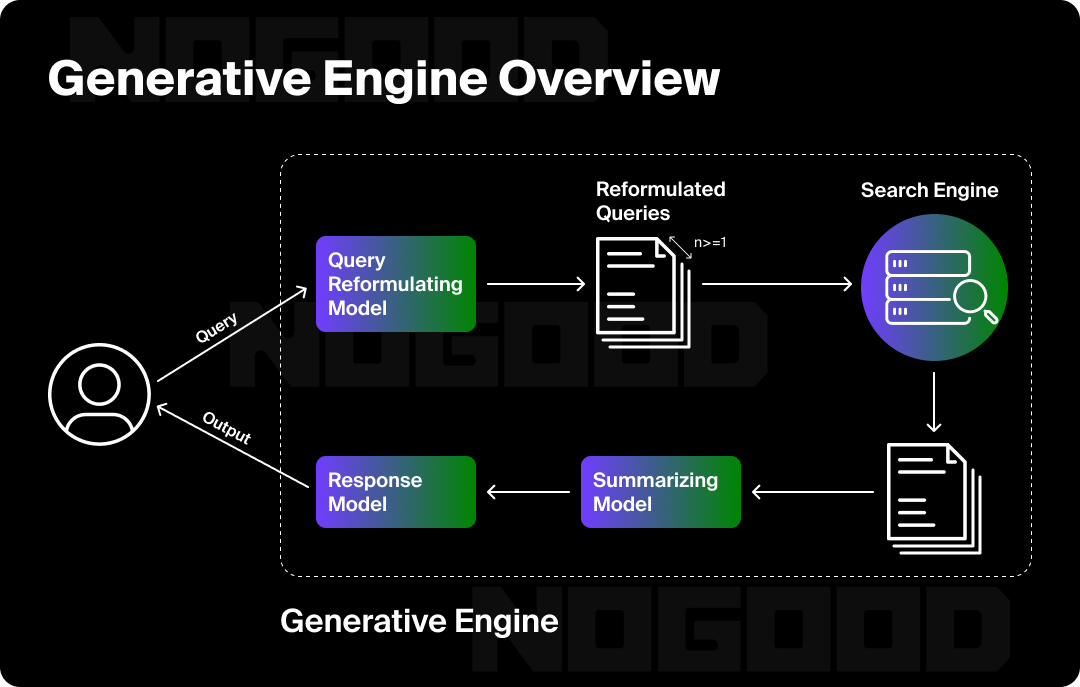
In the rapidly evolving landscape of digital discovery, a fundamental shift is underway. For the past two decades, the primary gatekeeper of online visibility has been the search engine, with strategies centered on Google’s ranking algorithms. Today, however, a new paradigm is emerging. With the proliferation of artificial intelligence, users are increasingly bypassing traditional blue links in favor of conversational interfaces. By mid-2025, the number of generative AI users in China alone soared to 515 million, illustrating a massive behavioral transformation where people ask ChatGPT, Perplexity, Gemini, or Claude for answers rather than typing keywords into a search bar .
This transition demands a new discipline: Generative Engine Optimization (GEO) . Also known as Answer Engine Optimization (AEO) or AI Optimization (AIO), GEO is the strategic practice of optimizing content so that AI models accurately cite, summarize, and recommend your brand in their generated responses . This comprehensive guide will walk you through the technical and strategic facets of GEO, ensuring your brand remains visible and authoritative in an AI-driven world.
1. What is Generative Engine Optimization?
Generative Engine Optimization is a systematic methodology designed to improve how generative AI models such as large language models (LLMs) and multimodal generators—perceive, process, and present your brand or product . Unlike traditional Search Engine Optimization (SEO), which focuses on index-based crawling and link authority to drive page-one rankings, GEO is concerned with token-based understanding and source attribution within AI-generated answers .
GEO operates on the principle that AI models do not just “crawl” the web like traditional search engines; they ingest vast amounts of data to understand concepts, entities, and relationships. When a user poses a question, the model synthesizes information from its training data or uses Retrieval-Augmented Generation (RAG) to pull fresh, relevant content . GEO ensures that when this synthesis happens, your content is the source that gets cited. It is a blend of technical optimization, content structuring, and brand authority building designed specifically for machine reading and response generation.
2. The Evolution: From SEO to GEO
To understand GEO, one must appreciate the distinct differences between traditional search engines and generative engines. The table below outlines the fundamental shift in strategy:
| Feature | SEO (Search Engine Optimization) | GEO (Generative Engine Optimization) |
|---|---|---|
| Core Mechanism | Index-based crawling and link analysis | Token-based understanding and synthesis |
| Primary Currency | Backlinks and domain authority | Brand mentions and citation frequency |
| Content Focus | Keyword density and meta tags | Entity clarity and structured definitions |
| User Interaction | Click-through to website (referral traffic) | Zero-click answers within the AI interface |
| Technical Rendering | Supports JavaScript rendering | Limited client-side JS; prefers clean HTML |
| Freshness | Important for time-sensitive queries | Highly prioritized for relevance |
As the table illustrates, GEO is not a replacement for SEO but an overlay. A strong SEO foundation helps, but winning in AI search requires new tactics focused on how machines “read” and attribute information.
3. Strategic Framework for GEO Success
Implementing GEO requires a structured approach. It is not a one-time fix but a continuous cycle of improvement. The Adobe LLM Optimizer framework suggests a cyclical process: Analyze, Plan, Act, and Adapt .
A. Analyze Current Visibility
Begin by auditing how your brand currently appears across different AI platforms. Use tools to analyze prompts where your brand is mentioned versus where it is absent. Look at the sentiment (positive, neutral, negative) and the position of your mention within the AI response .
B. Plan Targeted Campaigns
Group user intents into topic clusters. Identify high-value prompts that align with your business goals. If competitors are frequently cited in specific areas, those represent opportunities for your brand to fill gaps .
C. Act on Insights
Implement changes based on your analysis. This involves both updating your owned digital assets (onsite optimization) and influencing external platforms (offsite optimization) .
D. Adapt and Iterate
GEO is dynamic. AI models update, user behavior changes, and new competitors emerge. Regularly refine your strategy based on performance data and shifts in the AI landscape .
4. Onsite Optimization: Structuring Owned Content for AI
Onsite GEO involves modifying your website and documentation to make it easily digestible for AI crawlers and generators. The goal is to create content that is LLM-ready .
A. Technical Accessibility and Crawlability
-
Review Robots.txt and CDN Settings: Ensure that AI agents (like GPTBot, Google-Extended) are not blocked from crawling your site .
-
Stable URLs: Maintain consistent, human-readable URLs. Changing slugs can break embeddings that LLMs rely on for historical references .
-
LLMs.txt Support: Implement files like
llms.txtorllms-full.txt. These act as directories for AI crawlers, guiding them to canonical sources and allowed paths, which is a rapidly emerging best practice for GEO .
B. Content Structuring and Atomic Design
-
Atomic Pages: Create pages focused on a single concept, task, or API area. This “atomic” design helps LLMs chunk the information cleanly during ingestion, preventing context mixing .
-
Descriptive Headers: Use a clear hierarchy of H1, H2, and H3 headings. These act as anchors for AI tools, allowing them to deep-link to specific sections of your content .
-
Proximity of Concepts: Place code examples, request/response pairs, and explanations close together. This helps the model associate the theory with the practice .
C. Content Quality and Freshness
-
Plain Language: Write in direct, precise language. Avoid figurative marketing fluff that confuses semantic parsing .
-
Freshness: Regularly update 10-15% of your page content. LLMs prioritize recently updated information, viewing it as more relevant .
-
Direct Answers: Structure content to answer common user questions directly. If a user asks, “How do I reset my password?”, your documentation should have a page with that exact heading and clear steps .
D. Multimedia Optimization
-
Alt Text and Captions: Always include descriptive alt text for images. Multimodal AI models parse these fields to understand visual content .
-
Text-Based Formats: Where possible, use Markdown or JSON instead of embedding text within images or screenshots. Text is infinitely easier for LLMs to index and cite .
5. Offsite Optimization: Expanding Brand Footprint
Offsite GEO focuses on influencing third-party platforms that LLMs frequently rely on for training data and real-time citations. This is where “brand mentions” become the new “backlinks” .
A. High-Value Platforms
-
Wikipedia: Ensure your brand’s Wikipedia page is accurate, well-sourced, and written neutrally. It is a primary source for many LLMs .
-
Community Forums (Reddit, Quora): Participate authentically in discussions. Authentic, helpful contributions that naturally mention your brand can be highly influential .
-
News and PR: Secure coverage in reputable outlets. Third-party validation from news sources adds to your brand’s credibility (EEAT profile) .
-
Social Media and YouTube: Create content that answers common industry questions. Videos and posts are increasingly being ingested by multimodal models .
B. Best Practices for Offsite GEO
-
Diversify Footprint: Relying on a single platform is risky. Spread your presence across multiple authoritative sources.
-
Maintain Neutrality: Contributions to sites like Wikipedia must be unbiased and non-commercial to avoid being flagged or removed .
-
Monitor Citations: Use analytics tools to track where and how your brand is being cited across the web .
6. Advanced Technical GEO: Model and Workflow Tuning
For technology companies and AI-native startups, GEO also encompasses the technical optimization of the generative engines themselves. This involves fine-tuning models and workflows for efficiency and quality, a concept detailed by resources like the Generative Engine Optimization GitHub repository .
A. Hyperparameter Tuning
Optimizing the hyperparameters of a model can dramatically improve performance. Techniques include:
-
Grid Search: Exhaustively searching through a manually specified subset of the hyperparameter space.
-
Bayesian Optimization: Using probabilistic models to find the optimum settings with fewer iterations .
-
Early Stopping (Pareto Pruner): Halting the evaluation of workflows that are unlikely to improve results, saving significant computational cost .
B. Model Architecture Optimization
-
Quantization: Reducing the precision of a model’s numbers (e.g., from FP32 to INT8) to shrink the model size and speed up inference, often with minimal loss in accuracy .
-
Knowledge Distillation: Training a smaller “student” model to mimic a larger “teacher” model. This creates a compact, efficient model suitable for edge devices .
-
Sparse Attention: Modifying the attention mechanism in transformers to focus on relevant parts of the data rather than the whole, drastically reducing computational load .
C. Workflow-Level Optimization
Modern AI applications often involve complex workflows (e.g., RAG pipelines with retrievers and generators). Tools like DataRobot’s syftr or Uber’s PerfInsights are used to optimize these systems .
-
Multi-Objective Search: Tuning workflows to balance accuracy, latency, and cost. The goal is to find the “Pareto frontier”—the sweet spot where you cannot improve one metric without harming another .
-
Hierarchical Autotuning: Systems like Cognify use adaptive search algorithms to allocate budget across different layers of a workflow (structure, operators, prompts) to maximize quality improvements, which can be up to 2.8x in some cases .
7. Key Metrics: Measuring GEO Performance
To prove ROI, you must measure how your brand performs in AI-generated answers. Adobe’s framework highlights several key performance indicators :
-
Mentions: The raw count of times your brand is named in AI responses.
-
Citations: How often your specific content (web pages, articles) is used as a source.
-
Sentiment: The qualitative tone of the mention (positive, neutral, negative).
-
Position: Where in the response your brand appears. Early mentions (first or second) imply higher relevance.
-
Visibility Score: A composite metric combining mentions, citations, sentiment, and position to give a single view of your brand’s AI presence.
-
Agentic Traffic: The traffic coming from AI bots crawling your site. This is distinct from human traffic and indicates your content is being used to train or inform models .
8. The Future of GEO and Continuous Adaptation
The field of GEO is evolving at a breakneck pace. By late 2025, the industry has moved from theoretical concepts to practical implementations, with the first dedicated GEO software systems and agency practices emerging . The future will likely see:
-
Multimodal Optimization: Strategies extending beyond text to optimize how images and videos are generated and attributed.
-
Automated GEO (AutoGEO): Platforms that automatically adjust content structure and metadata based on real-time AI citation data.
-
Ethical and Responsible GEO: A growing emphasis on ensuring that optimization techniques do not lead to misinformation or manipulation, with calls for “information truthfulness and positive value” .
Conclusion

Generative Engine Optimization is no longer optional; it is a necessity for survival in the AI era. As users increasingly rely on chatbots and AI assistants for answers, the battle for visibility shifts from the search engine results page to the chat interface. By implementing a dual strategy of onsite technical precision and offsite authority building, brands can ensure they are not just present, but preferred, in the age of AI-driven discovery .