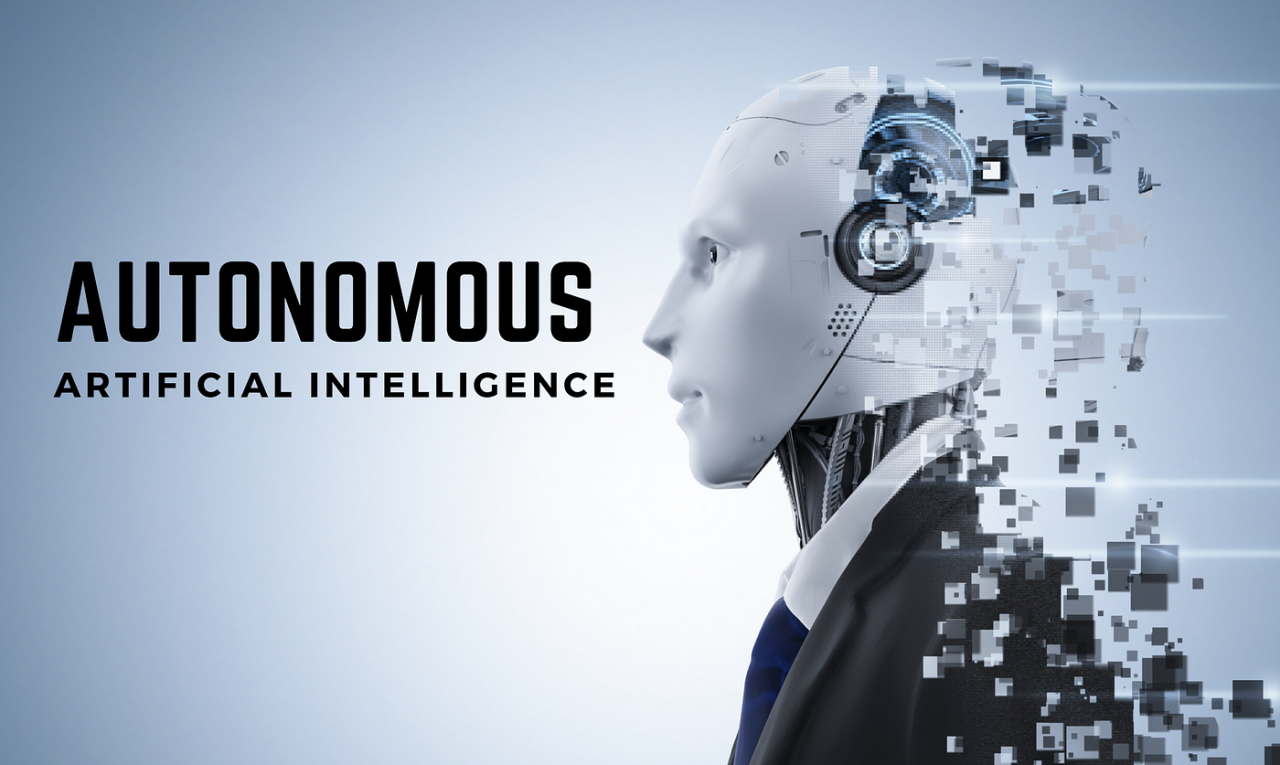
The landscape of work is undergoing its most profound transformation since the industrial revolution. We are witnessing the emergence of a new paradigm: the Autonomous AI Digital Workforce. This is not merely an incremental improvement in software tools or a more advanced chatbot; it represents a fundamental shift in the very structure of the enterprise. Companies are beginning to architect a hybrid workforce where human employees collaborate seamlessly with autonomous AI agents digital coworkers capable of reasoning, planning, and executing complex tasks with minimal human oversight . This article explores the rise of this digital labor force, its architecture, governance, and the strategic imperatives for businesses poised to embrace this new era.
Understanding the Autonomous AI Digital Workforce
To grasp the magnitude of this shift, one must first understand what distinguishes an autonomous AI agent from its technological predecessors. For decades, businesses have leveraged automation in the form of rule-based scripts and robotic process automation (RPA). These systems were rigid, executing predefined tasks in highly structured environments. Then came the era of generative AI, which introduced co-pilots capable of creating content and summarizing data, but still largely reactive to human prompts .
The autonomous AI agent, however, is different. It is proactive, goal-oriented, and agentic. As defined by industry experts, these systems can perceive their environment, reason about a high-level objective, break it down into sub-tasks, select the appropriate tools, and execute a multi-step workflow from start to finish . They move beyond providing a recommendation to owning an entire outcome. For example, instead of suggesting how to close the month’s books, an autonomous agent can actually perform the reconciliation, flag anomalies, and update the necessary records, all while documenting its actions in an immutable audit trail .
This evolution marks the transition of AI from a tool to a teammate. The conversation is no longer about how AI can help people work faster, but how enterprises can construct a cohesive collective where human strategy orchestrates digital autonomy .
The Architecture of the Human-Agent Collective
The successful integration of a digital workforce requires a meticulously designed operational architecture. This framework, often referred to as the Human-Agent Collective (HAC), is characterized by clearly defined roles, trust, and transparency . It is not simply a matter of plugging in software; it requires rethinking the workflow itself.
A. The Human Role: Strategist and Ethicist
In this new paradigm, the human role is elevated from executor to commander. Humans retain an absolute monopoly on several critical functions:
-
Defining Strategy: Setting the overarching goals and ethical guardrails within which agents operate.
-
Exercising Creativity and Empathy: Tackling novel, non-linear problems that require human intuition, emotional intelligence, and cross-domain synthesis.
-
Maintaining the “Kill Switch”: Having the ultimate authority to audit, intervene, and halt an agent or system that exhibits anomalies, bias, or unexpected behavior .
B. The Agent Role: Executor and Optimizer
Autonomous agents thrive in the realm of tactical execution and relentless optimization. Their core responsibilities include:
-
End-to-End Workflow Ownership: Managing complex, multi-step processes across various software applications without human intervention.
-
Real-Time Data Synthesis: Monitoring dynamic data environments (e.g., global supply chains, IT operations logs) 24/7, making micro-adjustments impossible for humans to perform manually.
-
Rapid Iteration: Running thousands of simulations to find the most efficient solution and autonomously implementing the winning outcome .
The Seven Species of Digital Workers

As the digital workforce expands, we are seeing the emergence of specialized AI agents tailored to specific business functions. Understanding these categories helps leaders visualize how digital labor can be deployed across their organization :
-
A. Business-Task Agents: Handle enterprise workflows across multiple software applications. Digital Labor: Invoice processing, data entry, document classification, scheduling. Examples: UiPath, Microsoft Power Automate.
-
B. Conversational Agents: Resolve customer support and employee questions through dialogue. Digital Labor: Customer service, IT tickets, HR tasks. Examples: Salesforce Agentforce, ServiceNow NowAssist.
-
C. Research Agents: Retrieve, analyze, and validate information from trusted sources. Digital Labor: Academic research, citation sourcing, technical analysis. Examples: OpenAI Deep Research, Perplexity Pro.
-
D. Analytics Agents: Analyze data to produce graphics, charts, and reports. Digital Labor: Data querying, dashboard creation, business insights. Examples: Power BI Copilot, ThoughtSpot.
-
E. Developer Agents: Handle complex coding tasks for software engineers. Digital Labor: Code completion, debugging, documentation, site reliability. Examples: Cursor, GitHub Copilot, Cognition’s Devin.
-
F. Domain-Specific Agents: Specialized work in regulated fields like law, medicine, and finance. Digital Labor: Contract analysis, medical triage, financial analysis. Examples: Harvey (legal), Hippocratic AI (healthcare).
-
G. Browser-Using Agents: Navigate websites and handle repetitive online tasks. Digital Labor: Form filling, online ordering, social media posting. Examples: OpenAI Operator, Google Project Mariner .
The Economic Imperative: Why Digital Labor Matters Now
The adoption of an autonomous AI workforce is not being driven by hype alone; it is a response to intense economic pressures. Enterprises are under historic strain to increase productivity, modernize operations, and close widening talent gaps. The organizations that fail to integrate AI-powered digital coworkers risk falling into a structural disadvantage against competitors that do .
Recent research underscores both the scale of the opportunity and the urgency. According to estimates, generative AI could boost global productivity by up to 3.4% annually, a transformational gain comparable to past industrial revolutions . Furthermore, the global AI agents market is projected to explode from $5 billion in 2024 to $50 billion by 2030, representing a 46% compound annual growth rate . The value at stake is immense, with AI agents potentially generating up to $450 billion in economic value by 2028 through revenue growth and cost savings .
Real-world results are already validating this potential. For instance, JPMorgan Chase’s AI-driven tools help wealth advisers retrieve research 95% faster, contributing to significant sales increases, while the bank’s AI initiatives have saved nearly $1.5 billion through fraud prevention and operational efficiencies . Similarly, Klarna’s AI assistant reduced average customer issue resolution from 11 minutes to just 2 minutes, maintaining customer satisfaction scores equal to human agents .
The Criticality of Governance: Onboarding the Digital New Hire
With great autonomy comes great responsibility. The most significant risk in this transition is not technological failure, but a lapse in governance. An autonomous agent with control over sensitive data and enterprise systems poses an unprecedented risk if not strictly controlled . Therefore, every successful digital workforce strategy must be built upon a robust agent governance framework. Experts suggest treating an AI agent like a new employee: it must be onboarded with the same rigor applied to top human talent .
This framework is founded on several non-negotiable pillars:
-
Pillar I: Identity and Access Control (The “Who”): Every agent must have a distinct, traceable digital identity and operate strictly under the Principle of Least Privilege (PoLP). It must access only the data and systems necessary for its defined tasks, limiting the potential blast radius of any compromise .
-
Pillar II: The Digital Job Description (The “What”): Just as a human has a defined scope of authority, an agent requires a formal “Mission and Authority Charter.” This charter defines its specific boundaries for example, a procurement agent may be authorized to negotiate contracts but not to finalize purchases above a certain threshold .
-
Pillar III: Compliance and Ethical Alignment (The “Rules Engine”): A centralized set of rules must codify all regulatory, ethical, and internal policies. Every proposed action by an agent must be validated against this engine before execution to ensure fairness and prevent bias .
-
Pillar IV: Observability and Real-Time Oversight (The “Audit Trail”): Traceability is essential for accountability. Every action and decision made by an agent must be logged in a secure, immutable audit trail. This shifts governance from reactive, after-the-fact auditing to proactive, real-time intervention using mechanisms like “circuit breakers” that automatically halt policy violations .
Navigating the Challenges: From Pilot to Scale
Despite the clear potential, the path to a fully autonomous digital workforce is fraught with challenges. TheCUBE Research’s Digital Labor Transformation Index reveals a significant “Vision-to-Value Gap.” While aspirations among leaders are high (scoring 4.1 out of 5), execution maturity lags significantly (scoring only 1.8), highlighting the cultural, technological, and trust-related barriers to implementation .
Key challenges include:
-
Fragmented Strategies: Only a small percentage of organizations report true cross-functional ownership of digital labor initiatives. Responsibility is often siloed within IT, preventing enterprise-wide scale .
-
The Trust Deficit: While confidence in basic automation is high, trust in fully autonomous agents remains low. As research shows, no trust means no scale, and no return on investment (ROI) .
-
Cultural Readiness: Experiments like Lattice inserting AI bots into org charts with performance reviews were met with swift employee backlash, proving that cultural readiness is lagging technological ambition .
To overcome these hurdles, enterprises should follow a phased implementation roadmap :
-
Strategic Planning: Define the strategic goals for digital labor and identify key processes for augmentation.
-
Pilot Validation: Start with a contained, high-volume, rules-heavy process to demonstrate clear ROI and build confidence .
-
Controlled Expansion: Scale successful pilots to other departments, establishing a centralized platform to avoid siloed efforts.
-
Intelligent Integration: Infuse agents with advanced AI capabilities (like large language models) to handle more complex, judgment-based tasks.
-
Ecosystem Maturity: Achieve a state of “phygital” workforce integration where human and digital talent collaborate seamlessly, with agents continuously learning and adapting .
The Future of Work: A Phygital Workforce
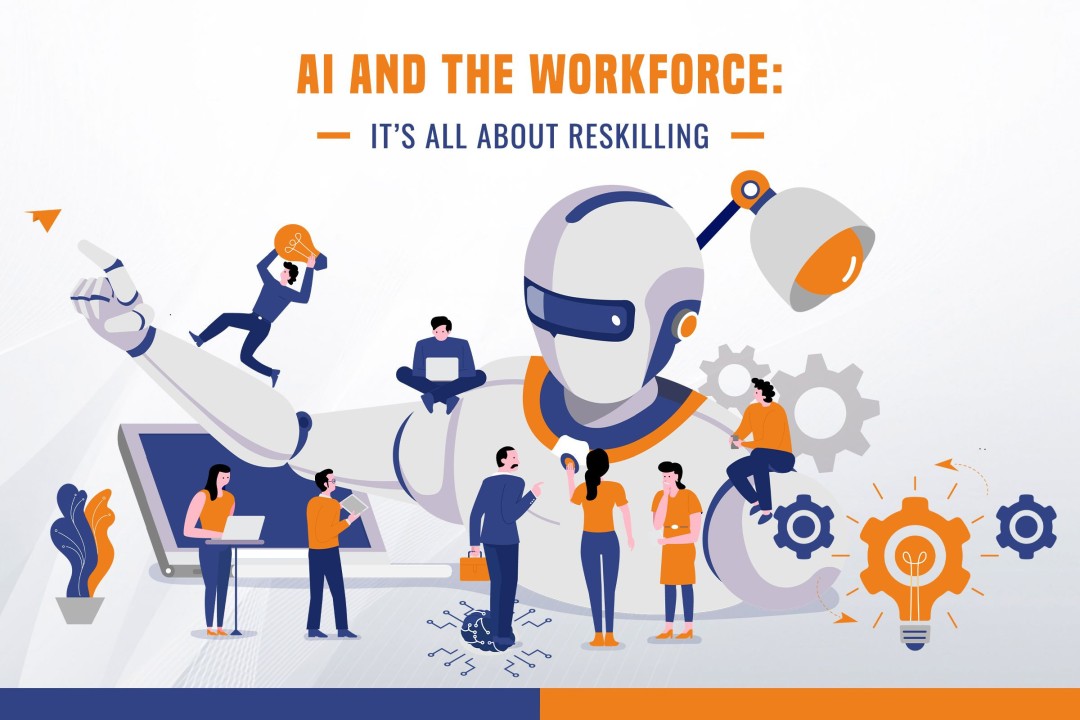
Looking ahead, the workforce of 2030 will be a hybrid ecosystem. We are moving toward a “phygital” reality where digital agents handle routine, data-intensive tasks, freeing humans to focus on creativity, strategy, and relationship-building . This shift will also create new, specialized roles such as agent architects, prompt engineers, and agent operations managers positions that require a blend of AI expertise and domain knowledge .
As NVIDIA CEO Jensen Huang aptly stated, “The IT department of every company is going to be the HR department of AI agents in the future,” highlighting the need to onboard, train, and govern these digital entities as one would for human employees . The organizations that win the Agentic AI race will not be the fastest to adopt the technology, but the fastest to govern it effectively. By establishing trust, building robust frameworks, and redesigning workflows for human-agent collaboration, businesses can unlock unprecedented levels of productivity and innovation, turning the autonomous AI digital workforce from a futuristic concept into their most valuable competitive advantage .